

Navigating the Future of Healthcare: Choosing the Right EHR Software
Aug. 6, 2025
1167

EHR software market is expected to generate $28.6 billion in 2024 and $30.1 billion in 2025, showing that healthcare organizations continue to invest heavily in these systems. The healthcare industry is changing fast, and at the heart of this change are Electronic Health Records (EHR) systems. These digital tools have moved from being a nice-to-have feature to an essential part of modern healthcare.
If you're a healthcare provider trying to pick the right EHR software, you're not alone in feeling overwhelmed by all the choices available.
In this blog post, I will tell you the advantages of EHR software in the healthcare industry. Before diving into how to choose the right system, let's understand why EHR software has become so important.
Why EHR System Matters More than Ever?
Research shows that hospitals that adopted EHRs with even basic capabilities had 12% lower average costs than their peers. But the benefits go far beyond just saving money.
The numbers tell an impressive story about how widely EHR systems have been adopted. As of 2021, nearly 4 in 5 office-based physicians (78%) and nearly all non-federal acute care hospitals (96%) adopted a certified EHR. This represents huge growth from where we started in 2011 when 28% of hospitals and 34% of physicians had adopted an HER.
 Key Features of EHR Software
When choosing an EHR system, certain features are essential for modern healthcare delivery.
Different research firms have varying projections, but all point to steady growth - the global Electronic Health Records Market size is expected to reach USD 49407.3 million from 2025-2029, expanding at a CAGR of 14.8% during the forecast period.
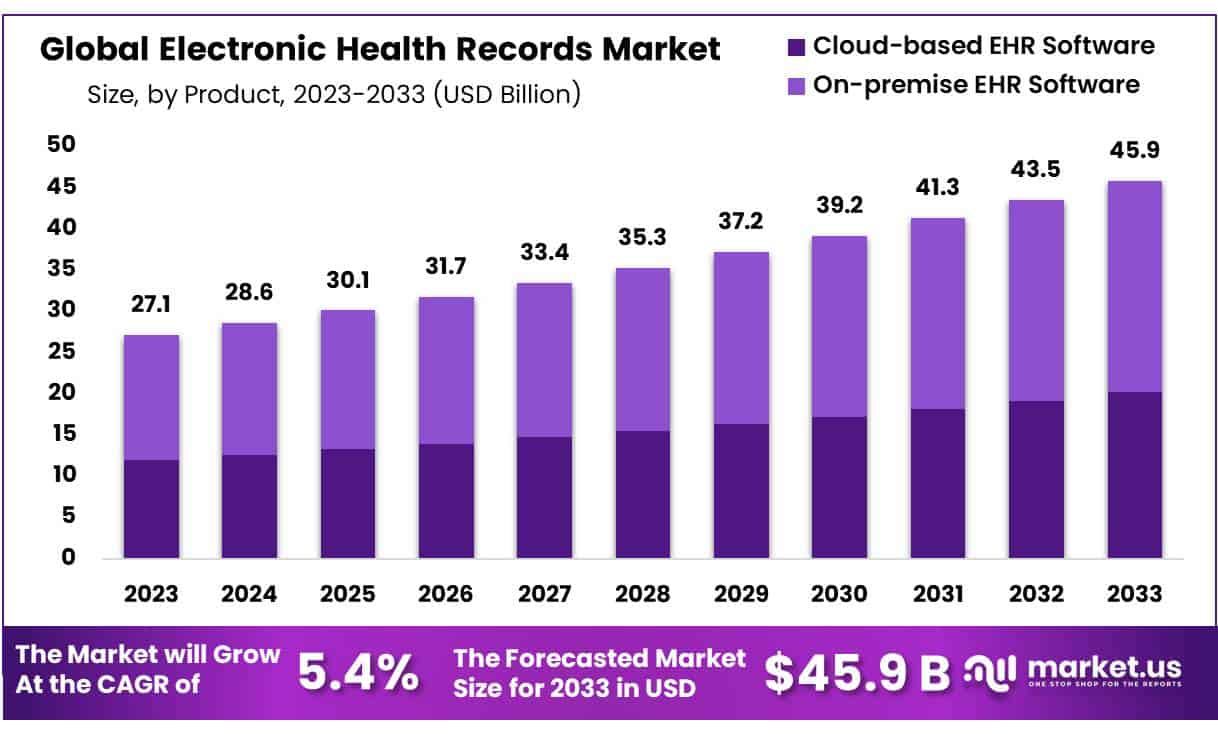
The web & cloud-based EHR systems segment led the market with the largest revenue share of 83.27% in 2024 and is anticipated to grow at the fastest CAGR during the forecast period. This isn't surprising when you consider the benefits cloud-based systems offer.
Digital records mean doctors can access patient information instantly, leading to faster and more informed decisions. No more hunting through paper files or trying to read unclear handwriting. EHR platforms also reduce repetitive manual tasks, helping doctors focus more on patient care rather than paperwork.
This means shorter wait times for patients and less stress for healthcare workers. Digital systems can alert doctors to potential drug interactions, allergies, or other safety concerns that might be missed with paper records. When different healthcare providers can easily share patient information, it leads to more coordinated and effective treatment.
They allow access to patient records from anywhere with an internet connection, provide automatic updates without needing manual software installations, offer cost-effective solutions with lower upfront costs and predictable monthly payments, and make it easy to scale by adding more users or storage as your practice grows. Professional-grade security measures are included, which most practices couldn't afford to implement on their own.
Evaluation of EHR Systems In Healthcare
When evaluating EHR systems, make sure they include several fundamental capabilities. The system should make it easy to create, update, and search patient records with intuitive interfaces that don't require extensive training. Integrated scheduling helps prevent double-bookings and makes it easier for patients to book appointments online. The EHR should work seamlessly with your billing system to reduce errors and speed up the payment process.

Electronic prescribing capabilities help prevent medication errors and make it easier for patients to fill prescriptions. The ability to order tests electronically and receive results directly in the patient's record saves time and reduces the chance of lost results. Good EHR systems also provide insights into your practice's performance through reporting and analytics, helping you identify areas for improvement.
Not all EHR systems are created equal. Understanding the different types can help you make a better choice.
Understanding Different Types of EHR Systems
Some systems focus primarily on electronic health records, while others combine EHR functionality with practice management features like scheduling, billing, and insurance processing. For smaller practices, an all-in-one solution might be more cost-effective and easier to manage.
|
Feature |
Small Practice EHR |
Enterprise EHR |
Specialty-Specific EHR |
||
|
Cost Range |
$100-500/month |
$10,000-50,000+/month |
$200-800/month |
||
|
Setup Time |
1-4 weeks |
6-18 months |
2-6 weeks |
||
|
User Capacity |
1-25 users |
100-10,000+ users |
1-50 users |
||
|
Customization |
Limited |
Extensive |
Moderate |
||
|
Training Required |
Minimal (1-2 days) |
Extensive (weeks) |
Moderate (3-5 days) |
||
|
Maintenance |
Vendor managed |
IT team required |
Vendor managed |
||
|
Updates |
Automatic |
Scheduled/manual |
Automatic |
||
|
Accessibility |
Web/mobile access |
Multiple platforms |
Web/mobile access |
||
|
Data Control |
Vendor hosted |
Full control |
Vendor hosted |
||
|
Integration |
Basic |
Extensive |
Specialty-focused |
||
|
Best For |
Solo/small clinics |
Hospitals/health systems |
Specialized practices |
||
|
Scalability |
Limited growth |
Highly scalable |
Moderate growth |
Some EHR systems are designed for specific medical specialties, offering features tailored to particular types of practices. For example, a dermatology-focused EHR might include specialized imaging tools, while a pediatric EHR might have growth charts and vaccination tracking built in. Large hospital systems have different needs than small private practices.
Guide for Selection Process
Start by taking a honest look at your current situation. How many providers will use the system? What are your biggest pain points with your current record-keeping method? Do you need specialty-specific features? Next, set your budget. EHR systems can range from a few hundred dollars per month for small practices to thousands of dollars monthly for larger organizations. Consider not just the monthly subscription cost, but also setup fees, training costs, and potential hardware upgrades.
Make a list of must-have features versus nice-to-have features. This will help you focus on systems that meet your core needs without getting distracted by fancy extras you might not actually use. Look at multiple vendors and compare their offerings. Read reviews from other healthcare providers, especially those in similar practice situations to yours.
Most EHR vendors offer demonstrations or free trials. Take advantage of these opportunities to see how the system actually works in practice. Pay attention to how intuitive the interface is and whether the workflow makes sense for your practice. Even the best EHR system won't help if your staff can't use it effectively. Ask potential vendors about their training programs and ongoing support options.
Common Mistakes to Avoid
The cheapest option isn't always the best value. A slightly more expensive system that works well for your practice will save money in the long run compared to a cheap system that creates problems.
Think about where your practice might be in five years. Will the system be able to grow with you? The doctors, nurses, and administrative staff who will actually use the system should have input in the selection process. A system that looks good to administrators might be difficult for daily users.
Implementing a new EHR system takes time and requires training. Plan for this and don't expect everything to work perfectly from day one. If you use other software systems (billing, lab systems, imaging), make sure your new EHR can integrate with them.
Read More about the Custom Software Development Services
The Future of EHR Systems
As we look toward the future, several trends are shaping the development of EHR systems:
AI is starting to help with tasks like clinical decision support, predictive analytics, and automated documentation.
Systems are getting better at sharing information with each other, making it easier for patients to move between different healthcare providers.
Patients increasingly expect to be able to access their health records, schedule appointments, and communicate with their healthcare providers online.
More EHR systems are being designed to work well on tablets and smartphones, giving healthcare providers more flexibility in how and where they access patient information.
The growth of telemedicine has pushed EHR vendors to better integrate virtual care capabilities into their platforms.
Making Your Decision
Choosing an EHR system is a significant decision that will affect your practice for years to come. Take your time, do your research, and don't be afraid to ask questions. The right system can transform your practice, improve patient care, and make your daily work more efficient and satisfying.
Remember that no system is perfect, and there will always be a learning curve when implementing something new. The goal is to find the system that best fits your specific needs and has the support structure to help you succeed.
For more information on EHR software solutions, visit CodeSuite, where we offer cutting-edge healthcare software services designed to help you achieve your goals.